Modernization of IT Systems of the Ministry of State Domains and Land Affairs

Context & Challenges
As part of the modernization of its e-government services, the Ministry of State Domains and Land Affairs has undertaken the modernization and redesign of its information systems dedicated to managing state-owned assets and appraisal files.
The project faces several key challenges:
- Fragmented and aging IT systems: Separate systems are currently used to manage agricultural and non-agricultural state-owned assets, as well as appraisal files.
- Scattered and heterogeneous data: Existing data requires cleansing, standardization, consolidation, and harmonization.
- Extensive geographical coverage: The solution must support both central departments and all 24 regional directorates.
- Interoperability requirements: Seamless integration is needed between business applications, partner administrations, and ELISE, the National Electronic Correspondence Management System.
Solution & contribution
think tank is supporting the modernization and redesign of the Ministry’s information system around an integrated solution and unified environment.
The solution would centralize the management of state-owned assets and structures the electronic registers of real estate assets, leveraging the ELISE National Electronic Correspondence Management System.
Sector :
e-Government
Beneficiary :
Ministry of State Domains and Land Affairs
Funding :
Own funds
Contracting authority:
Ministry of State Domains and Land Affairs
Target scope & features
- Integrated management of agricultural and non-agricultural state-owned assets
- Management of assets, land titles, third parties, committees, and documents
- Management of acquisitions, allocations, sales, leases, and collections
- DMS / ELISE integration for document workflows, approvals, and correspondence
- Document certification through visible electronic seals with QR codes
Expected results
- A unified information system consolidating the three existing systems and registers for integrated management of the State’s real estate assets.
- A consolidated and reliable view of Tunisia’s state-owned properties and real estate assets.
- More reliable and standardized data through the migration, cleansing, and consolidation of existing information.
- Optimized resource allocation across sectors and projects, supported by better visibility into the State’s asset portfolio.
- Stronger collaboration between stakeholders through smoother information flows.
- Improved interoperability with ELISE and partner administrations’ information systems.
Technical Assistance for the Modernization of CNI Platforms

Context & Challenges
As part of its ongoing digital transformation and information systems modernization efforts, the National IT Center (CNI) of Tunisia’s Ministry of Communication Technologies needed to ensure the continuity of its digital services while strengthening its technical capabilities to develop, maintain, and evolve its business platforms.
The key objectives included:
- Ensuring the continuity of CNI’s digital services, including hosting services, the interoperability platform, and various business applications.
- Supporting the evolution and modernization of business platforms within a complex and constantly evolving technology environment.
- Strengthening CNI’s internal technical capabilities across a broad range of technologies and architectures.
Sector :
e-Government
Beneficiary :
CNI – National IT Center
Funding :
Own funds
Contracting authority:
Ministry of Communication Technologies of Tunisia
Solution & contribution
think tank deployed an on-demand technical assistance framework, combining specialized technology expertise with hands-on support for CNI teams to help evolve and modernize its platforms.
- Specialized IT expertise: Development, microservices, interoperability, WSO2, DevSecOps, Kubernetes, cybersecurity, databases, and more.
- Flexible on-demand support tailored to CNI’s evolving needs.
- Knowledge and skills transfer to CNI technical teams.
Results & Impact
- Sustainable knowledge transfer, extending beyond individual technical interventions.
- Greater continuity and reliability of CNI’s digital services and business platforms.
- Stronger technical capabilities and greater team autonomy.
- Improved mastery of modern technologies supporting application development, interoperability, cybersecurity, and IT operations.
- Enhanced capacity to evolve and maintain business platforms through access to specialized technical expertise.
Modernization of the Treasury Deposit Management System
Context & Challenges
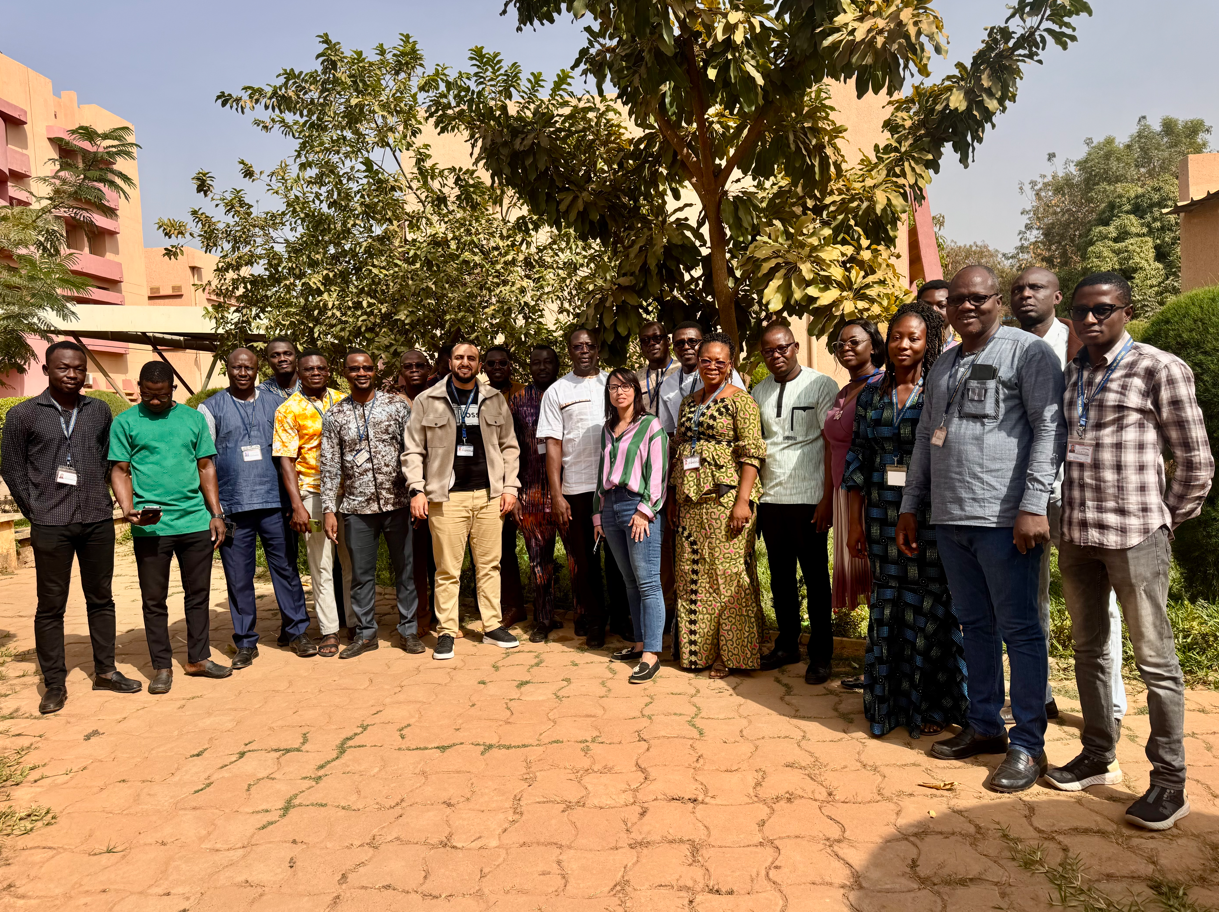
As part of a study conducted by the World Bank, the banking function of the Public Treasury of Burkina Faso was assessed to evaluate its capacity to efficiently manage funds allocated to development projects and programs financed by the World Bank and other Technical and Financial Partners (TFPs).
Following the assessment, several recommendations were made, including the modernization of the Treasury Deposit Management System (SGDF) to align it with the evolving requirements of the Treasury’s banking function and international standards, while providing online banking services.
Solution & Contribution
think tank supported the modernization of the Treasury Deposit Management System (SGDF) to meet the evolving needs of the Treasury’s banking function and comply with international standards.
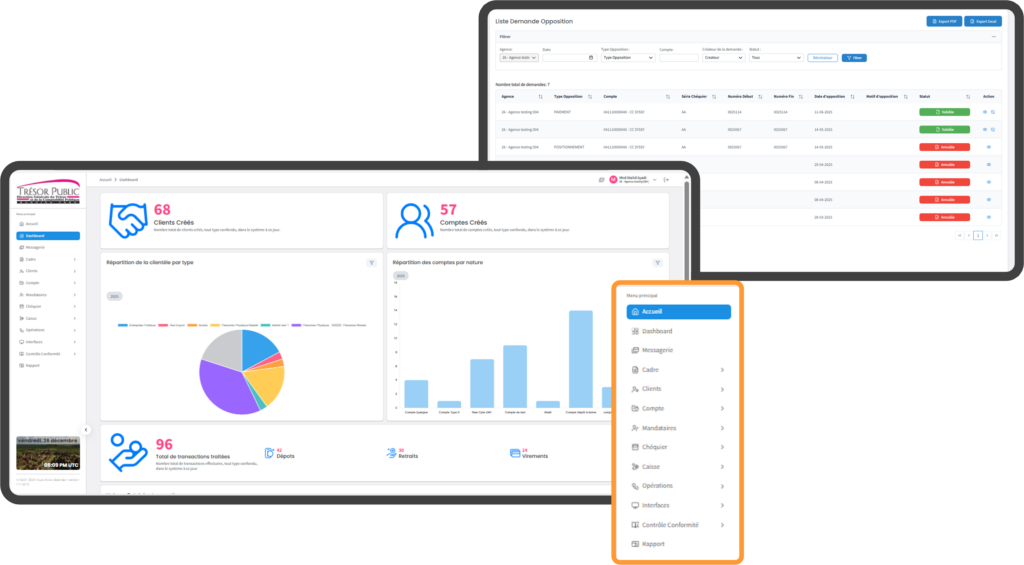
The solution provides a modern banking information system that centralizes customer data and transactions while strengthening regulatory compliance. It is built on a microservices-based architecture designed to support scalability, integration, and operational efficiency.
Sector :
Finance
Beneficiary :
Ministry of Economy, Finance and Prospective
Funded by :
IDA- World Bank
Contracting authority:
PAIF-PME, Financial Inclusion and Access to Finance Project for Small and Medium-sized Enterprises
Key features
- Customer management
- Product and package management
- Mandate and authorized representative management
- Integration with the accounting module via APIs
- Cash operations and accounting management
- Financial transaction management, including transfers, checks, bills, and incidents
- Statistics, reporting, and data export
Results & Impact
- +7 million online banking transactions, enabled by more streamlined and digitalized operations.
- +10,000 active accounts managed through the system.
- Enhanced transparency and traceability, supporting better management of public funds and reducing fraud risks.
- 24/7 access to online banking services for citizens in Burkina Faso.
- Accelerated digitalization, contributing to the strengthening of the public-sector digital ecosystem.

On behalf of the entire Public Treasury team, we would like to express our sincere appreciation and congratulations to the entire think tank team for the quality of the service delivered and the successful deployment of the new version of SGDF.
M. Bosso Hyacinthe Tinguéri
Application Engineer, DGTCP/MINEFID/BF
Development of the Centralized Electronic Collateral Registry “TSARA ANTOKA”

Context & Challenges
The Ministry of Economy and Finance of Madagascar sought to improve access to financing for investors, particularly SMEs, through a secured lending framework designed to support investment and economic development.
Implemented on behalf of the Ministry of Justice of Madagascar and financially supported by the International Finance Corporation (IFC), a member of the World Bank Group, the project aimed to strengthen the transparency and efficiency of the credit system and facilitate access to financing.
The key challenges included:
- Limited access to financing for investors and SMEs in Madagascar.
- Lack of transparency and visibility within the credit and collateral system.
- Limited digital infrastructure, particularly in terms of Internet connectivity.
Solution & Contribution
think tank designed, developed, and deployed the Centralized Electronic Movable Collateral Registry (TSARA ANTOKA), an online platform for the registration, processing, consultation, and rapid access to data related to movable collateral, in accordance with the Malagasy legal framework.

Sector :
E-Government
Beneficiary :
Ministry of Justice of Madagascar
Funded by :
IFC – World Bank
Contracting authority:
Ministry of Economy and Finance – Madagascar Financial Inclusion Project
Key features
- Authentication and creditor portal
- Online submission of requests to register, amend, or discharge collateral, including pledges and leases
- Open data and search engine
- Advanced search and filtering of collateral records
- Online document upload and submission
- Request tracking, lists, and history for collateral registration and filing requests
Results & Impact
- Improved access to credit for investors and SMEs.
- Simplified and more efficient processes for registering and searching movable collateral.
- Centralized, real-time database accessible 24/7.
- Enhanced security of transactions secured by movable assets.
- Greater transparency within Madagascar’s movable collateral system.
Congratulations on this remarkable success and for ending 2022 on such a high note. Thank you for your collaboration, perseverance, and solution-oriented mindset.
F. Elaine MacEachern
Senior Financial Sector Specialist, IFC
Development of the Electronic Register of Beneficial Owners (REBE)

Context & Challenges
Across Africa, and particularly in Ivory Coast, revenues from oil, gas, and mining resources have the potential to contribute significantly to economic and social development. However, the extractive sector also faces challenges related to poverty, corruption, and conflict.
In this context, implementing the Extractive Industries Transparency Initiative (EITI) Standard is an important mechanism for strengthening transparency and good governance. The standard notably calls for the establishment of a public register of the beneficial owners of companies operating in the extractive sector.
The key challenges included:
- Limited transparency regarding the true owners of extractive companies.
- Risks of corruption and fraud, including those associated with concealed or opaque ownership structures.
- Compliance with EITI requirements for beneficial ownership transparency.
Solution & Contribution
think tank designed and implemented the Electronic Register of Beneficial Owners (REBE) in Ivory Coast, a centralized platform that makes information on the beneficial owners, owners, and shareholders of companies operating in the extractive sector publicly accessible.

Sector :
E-Government
Beneficiary :
Extractive Industries Transparency Initiative (EITI)
Funded by :
GIZ
Contracting Authority :
GIZ
Key features
- Authentication and company portal
- Public portal and search engine
- Online filing of beneficial ownership declarations
- Detection of declarations submitted for illicit purposes
- Generation of declaration filing / non-filing certificates
- Update of beneficial owners, shareholders, and company information
- Download and upload of company data summaries
Results & Impact
- Supported the validation of the CN-ITIE standards in 2022.
- Digitized and streamlined beneficial ownership management.
- Increased transparency regarding the ownership and control of extractive companies.
- Strengthened governance through improved traceability of beneficial owners.
- Contributed to combating fraud and money laundering by facilitating the identification of the ultimate owners of companies.
Development of a Cost Planning Platform: e-Kalkulatorenmodul (eKM)

Context & Challenges
As new vehicle models are developed, managing the overall manufacturing cost is strategically important to maintaining competitiveness while meeting increasingly demanding requirements for design, safety, and sustainability.
The growing complexity of vehicles and their components results in a wider range of cost elements and parameters to be considered. Managing and consolidating this information can become challenging when data is distributed across different sources and managed through heterogeneous tools.
The project aimed to establish a digital environment to centralize, structure, and leverage a library of cost and expense components, supporting overall manufacturing cost planning and cost optimization, particularly for body construction.
Solution & Contribution
think tank developed e-Kalkulatorenmodul (eKM), a comprehensive web-based platform dedicated to managing and planning the overall manufacturing costs of new vehicle models.
Sector :
Automotive
Beneficiary :
Volkswagen Group
Funding :
Own funds
Domain :
Software development
Key capabilities
- Centralized library of cost and expense components
- Cost item management and structuring
- Reusable cost components for cost planning
- Planning of overall manufacturing cost
- Cost calculation and consolidation for new vehicle models
- Management of multiple cost parameters
- Centralized data access through a web-based platform
- Data consistency and traceability throughout the planning process
Estimated results
- More effective centralized cost management
- Fewer errors in cost estimates
- Improved cost control and optimization throughout the planning process
- Better-informed decision-making across VW teams
Automation of test/ release processes for Automotive components

Context & Challenges
With an expanding product portfolio and increasingly shorter development cycles, AUDI AG continuously seeks to improve the efficiency and performance of its production operations.
In this context, the “Digital Factory / ViTech” project focuses on optimizing production processes through the use of information technologies, particularly in body construction and joining technologies.
The key challenges included:
- Building a reliable and reusable knowledge base to identify the most suitable joining technologies and parameters for each body component.
- Standardizing workflows to harmonize practices and reduce operational costs.
- Progressively automating validation and production release, including through the use of AI-based algorithms.
- Ensuring integration and interoperability with the Audi / Volkswagen Group IT ecosystem.
Solution & Contribution
think tank automated testing and validation processes for automotive body construction by developing a centralized database of joining technologies, based on test results and key process parameters.
The solution consolidates technical knowledge and test data, providing a reliable foundation for evaluating and selecting the most suitable joining technologies and supporting more efficient validation processes.

Sector :
Automotive
Beneficiary :
Audi AG
Funding :
Own funds
Domain :
Workflow optimisation
Project scope
- Process and workflow analysis & reengineering
- Application architecture design
- Solution design & development
- Integration with the Group’s existing IT systems
- Data aggregation and migration
- Maintenance, operations, and technical support
Results & Impact
- 70% reduction in physical testing, accelerating the validation of materials and joining technologies.
- Reduced production costs through optimized and increasingly automated validation processes.
- Fewer human errors and improved security of processes and technical knowledge.
- Knowledge retention and reuse, helping preserve critical expertise despite team changes.
- Time savings for innovation, enabling experts to focus on developing and improving joining technologies.
Thanks to think tank, we have not only transformed our joining database into a central and widely used application within AUDI AG, but have also significantly increased our efficiency.
Dominik Hußmann
Joining Technology Development
Development of a Web Application: “Your Product Assistant (YPA)”

Context & Challenges
With the growing number of safety and compliance regulations and increasingly stringent quality requirements, BMW Group must ensure compliance with high technical standards across its development activities.
The key challenges included:
- Managing regulatory complexity arising from evolving safety, compliance, and ISO standards.
- Supporting development teams in an agile environment without adding unnecessary complexity to their workflows.
- Centralizing and making compliance requirements and artifacts easily accessible to product teams.
- Driving user adoption across a large user base through a simple and intuitive user experience.
Solution & Contribution
think tank developed the web application “Your Product Assistant (YPA)” to support BMW product teams in understanding and implementing the relevant vehicle-related standards, documents, and compliance artifacts within an agile development environment.
The solution provides centralized access to key information while integrating compliance activities into existing development workflows.
Sector :
Automotive
Beneficiary :
BMW Group
Funding :
Own funds
Domain :
Software Development
Results & Impact
- Enhanced compliance: Improved adherence to safety requirements, ISO standards, and mandatory compliance artifacts.
- Streamlined processes: Centralized requirements and simplified compliance workflows.
- Greater team efficiency and agility: Seamless integration with agile practices and task automation through a bidirectional interface with JIRA.
- Improved user experience: Role-based views and centralized access to relevant requirements and information.
- Enhanced quality and traceability: Easy access to documentation, requirements tracking, and full traceability of actions.
Development of a Resource Management Solution: “TurboPlan 24”

Context & Challenges
Accelleron designs, manufactures, and services high-performance turbochargers and fuel injection systems, primarily for the marine and energy sectors. By combining advanced technologies with digital solutions, the company helps improve engine efficiency and reduce emissions.
In a highly active R&D environment, Accelleron faced several key challenges:
- Coordinating a large number of experiments and research projects with diverse requirements and constraints.
- Structuring processes and responsibilities to facilitate collaboration across specialized teams.
- Optimizing test bench and resource planning to maximize availability and utilization.
- Modernizing legacy systems that had become outdated and were limiting operational efficiency.
- Maintaining technological leadership and competitiveness in a highly competitive industrial sector.
Solution & Contribution
think tank designed and implemented “TurboPlan 24”, a Manufacturing Execution System (MES) centralizing the planning and scheduling of Accelleron’s resources.
The platform optimizes the use of test benches, teams, and technical resources through integrated planning and centralized access to key information, providing a more coordinated and efficient approach to managing testing activities.

Sector :
Industry
Beneficiary :
Accelleron AG
Funding :
Own funds
Domain :
Software Development
Project scope
- End-to-end application development, including user interfaces and system integrations.
- User interface design aligned with current UX/UI standards.
- Concept development and ongoing application support, including operations, maintenance, and continuous improvement.
- 360° support throughout the entire lifecycle, from design and deployment to operations and further development.
Results & Impact
- Optimized human and technical resources through centralized planning.
- Improved decision-making with real-time access to data and key performance indicators.
- Standardized testing processes for more consistent and controlled execution.
- Increased operational efficiency through better coordination of teams and resources.
The new solution works perfectly and has significantly improved the efficiency of preparing and conducting our tests, as well as the planning of our internal resources.
Mirco von Bergen
Head of Instrumentation
Development of a Change Order Management Platform

Context & Challenges
IDS GmbH, a subsidiary of Allianz SE, provides managed services for data management, risk control, performance analysis, and investment reporting, including services supporting regulatory requirements for client portfolios.
The key challenges included :
- Securing data and regulatory documents throughout their processing lifecycle.
- Structuring change requests related to reference data and regulatory documentation.
- Standardizing validation workflows to ensure reliable and consistent change processing.
- Ensuring full traceability of changes and effective version control.
- Digitizing and centralizing processes within a single, secure platform.
Solution & Contribution
think tank designed and implemented “Smart Managed Services for Intelligent Investment Strategies”, a secure web-based platform for managing orders and change requests, with dedicated workflows for the validation of regulatory data and documents.
The solution centralizes, secures, and tracks change requests while standardizing their processing and validation workflows.
Sector :
Finance
Beneficiary :
IDS GmbH – Allianz
Funding :
Own funds
Domain :
Software Development
Results & Impact
- Greater transparency: Real-time visibility into the processing status of each request.
- Enhanced traceability: A complete, accessible history of all changes.
- Data availability: Continuous access to client-specific information.
- Improved data quality: Structured validation workflows that help ensure the reliability of data and resulting reports.
We highly appreciate our collaboration with think tank as a trusted partner and look forward to working together on future projects.
Veit Trunk
Head of Service Design


